Terrazzo has long been a favorite in interior design. Its unique speckled texture and customizable appearance make it stand out. But today, there are two main options: traditional terrazzo and terrazzo tiles.
Many users struggle with this choice. They wonder about the real differences. Which is more durable? Which fits their budget? Which is better for their space?
This article breaks down the key distinctions. We focus on material, performance, application scenarios, and cost. We also highlight two critical factors: environmental friendliness and durability. By the end, you’ll know exactly which one to pick.
1. Core Difference: Material & Production
The biggest gap lies in how they are made. This defines their basic properties.
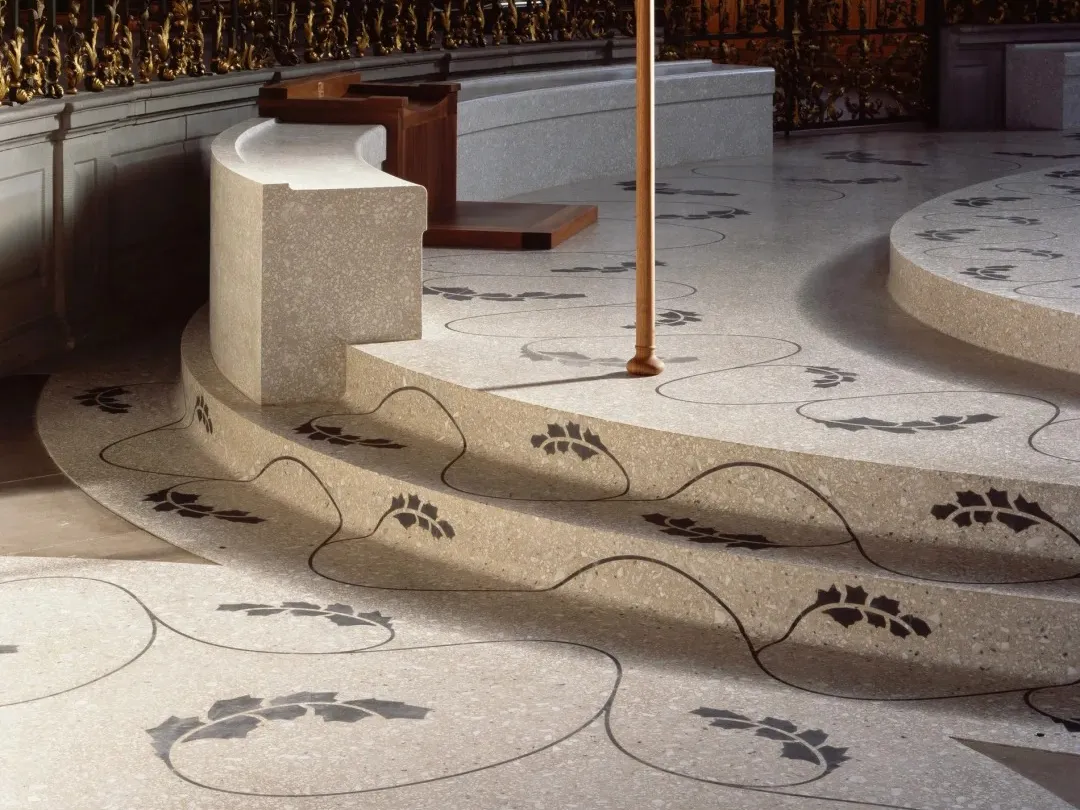
Traditional Terrazzo: On-site Casting
Traditional terrazzo is a "site-built" material. It mixes cement (or epoxy resin) as the binder. Then it adds marble chips, glass fragments, or other aggregates.
Workers pour this mixture on-site. They level it, let it cure, and then grind and polish it. The whole process happens in your space.
Its composition is simple. But the on-site production means quality depends heavily on workers’ skills.
Terrazzo Tiles: Factory Sintering & Pressing
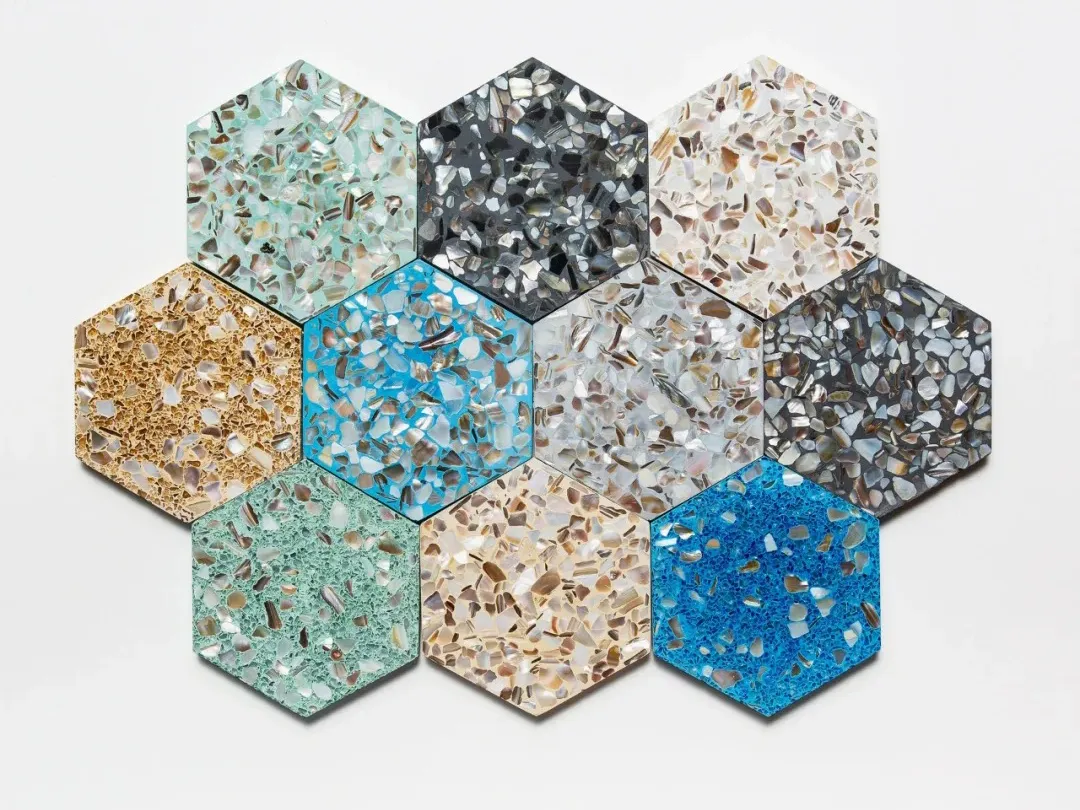
Terrazzo tiles are industrial products. They use natural stone aggregates and ceramic powder. These materials go through high-pressure pressing. Then they are sintered at high temperatures (over 1200°C).
The production is standardized. Every tile has the same size, thickness, and texture. There’s no on-site mixing or curing. You just install the finished tiles.
For environmental friendliness, terrazzo tiles have an edge. Reputable factories use recycled aggregates. They also control emissions strictly during production. Traditional terrazzo often uses more cement. Cement production releases large amounts of CO₂.
2. Performance Showdown: Durability & Practicality
Performance is what users care most about. Let’s compare them in key areas: wear resistance, water resistance, slip resistance, and maintenance.
Wear Resistance: Terrazzo Tiles Win
Durability starts with wear resistance. Traditional terrazzo’s surface is hard. But its binder (cement or epoxy) is softer than the aggregates. Over time, the binder wears down. This makes the aggregates protrude or fall off. The surface becomes rough.
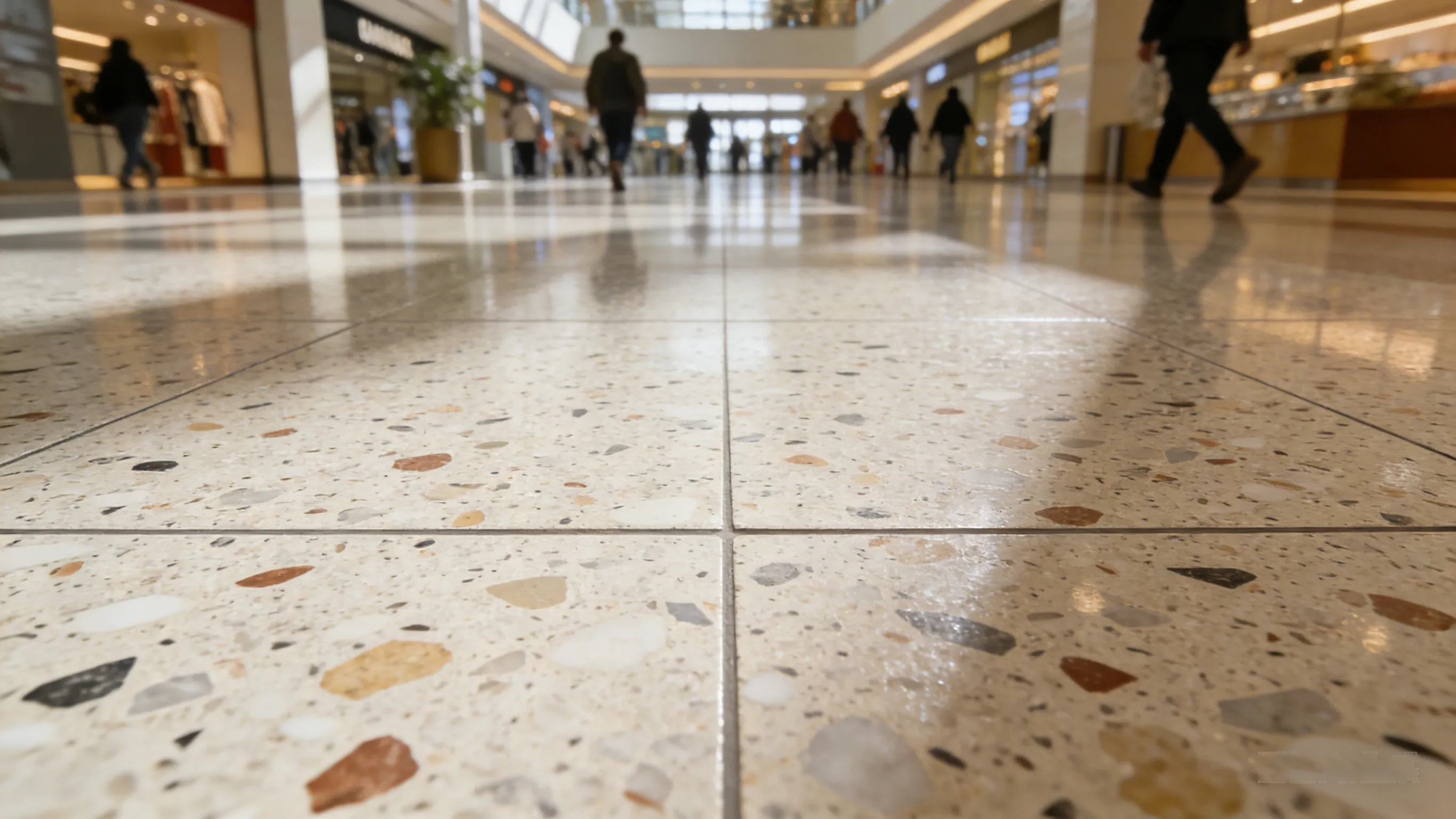
Terrazzo tiles are different. High-temperature sintering makes them dense. The surface is covered with a protective layer. It resists scratches from daily use. It also stands up to heavy foot traffic. Many terrazzo tiles have a PEI rating of 4 or 5. This means they are suitable for high-traffic areas like malls.
In long-term use, terrazzo tiles retain their appearance better. Traditional terrazzo needs re-polishing after a few years.
Water Resistance: Tiles Are More Reliable
Water resistance is crucial for moisture-prone areas. Traditional terrazzo has tiny pores. These pores absorb water easily. If water seeps in, it can cause problems. For example, in cold climates, frozen water expands. This cracks the surface.
Terrazzo tiles have low water absorption (usually below 0.5%). The sintering process closes most pores. Water can’t penetrate easily. This makes them ideal for bathrooms, kitchens, and laundry rooms.
Traditional terrazzo can be sealed to improve water resistance. But the sealant wears off over time. You need to reapply it regularly.
Slip Resistance: Both Are Good, Tiles Are More Consistent
Slip resistance is a safety concern. Traditional terrazzo’s polished surface is smooth. It can be slippery when wet. You can choose a matte finish to improve this. But the effect varies by the polishing process.
Terrazzo tiles offer more options. They have different surface treatments. For example, brushed or sandblasted finishes. These provide better grip. The slip resistance is consistent across all tiles. You don’t have to worry about uneven quality.
Maintenance Cost: Tiles Save Time & Money
This is a key difference for many users. Traditional terrazzo requires regular maintenance.
First, you need to wax it every 3-6 months. This keeps the surface shiny and protected. Second, you need to re-polish it every 2-3 years. This fixes scratches and wear. The labor and material costs add up over time.
Terrazzo tiles are almost maintenance-free. You just need to clean them with water and mild detergent. No waxing, no re-polishing. Even after years of use, they look new with simple cleaning. This saves a lot of time and money in the long run.
3. Application Scenarios: Which Fits Your Space?
Their properties determine their best uses. Traditional terrazzo and terrazzo tiles excel in different scenarios.
Traditional Terrazzo: Best for Large Commercial Spaces
Traditional terrazzo is great for large commercial areas. For example, airports, train stations, and shopping malls.
Why? First, it can be poured into a seamless surface. There are no grout lines. This makes it easy to clean. It also looks uniform in large spaces. Second, it’s customizable. You can choose any color of binder and aggregates. You can even create patterns or logos.
But it’s not ideal for homes. The on-site production is messy. It takes a long time (usually 2-3 weeks) to cure. This disrupts daily life.
Terrazzo Tiles: Perfect for Both Home & Commercial Use
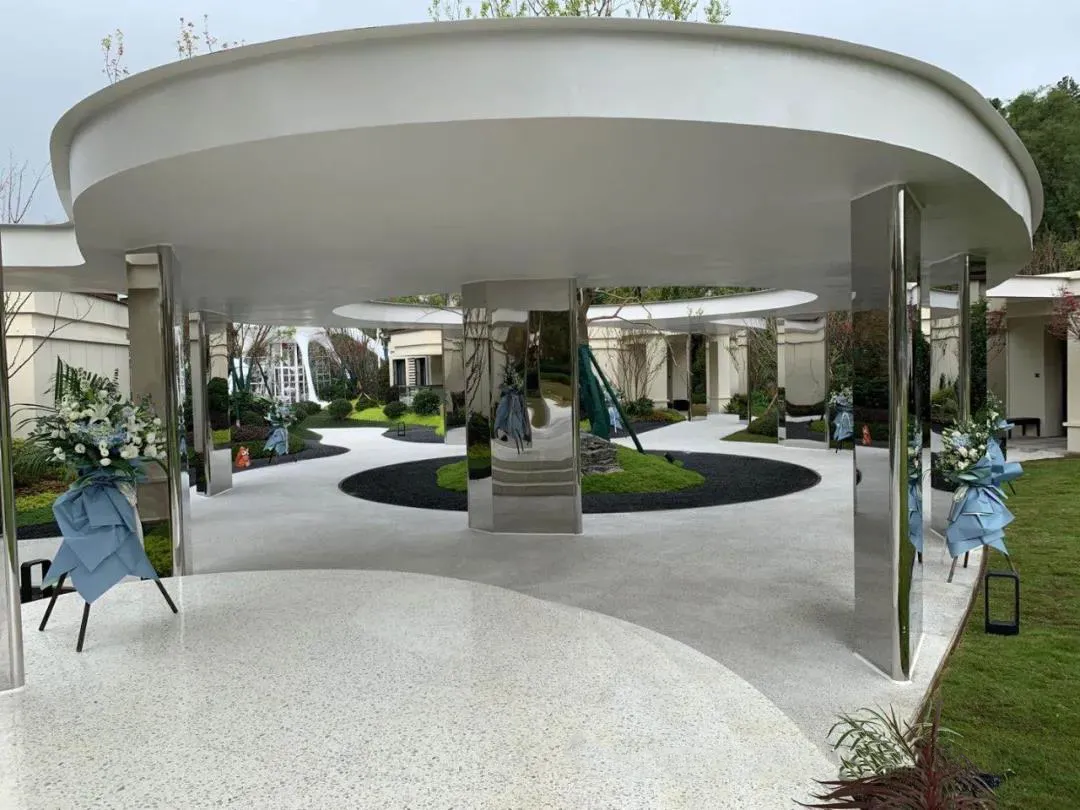
Terrazzo tiles are versatile. They fit both residential and commercial spaces.
For homes: They are easy to install. The process takes only 1-2 days. They come in various sizes and styles. You can use them in living rooms, bedrooms, kitchens, and bathrooms. They add a modern touch to any home design.
For commercial spaces: They are durable enough for high traffic. They are also cost-effective for large areas. Many restaurants, offices, and retail stores use them.
Another advantage: They can be used on walls. Traditional terrazzo is heavy. It’s hard to apply on walls. Terrazzo tiles are lightweight. They expand the design possibilities.
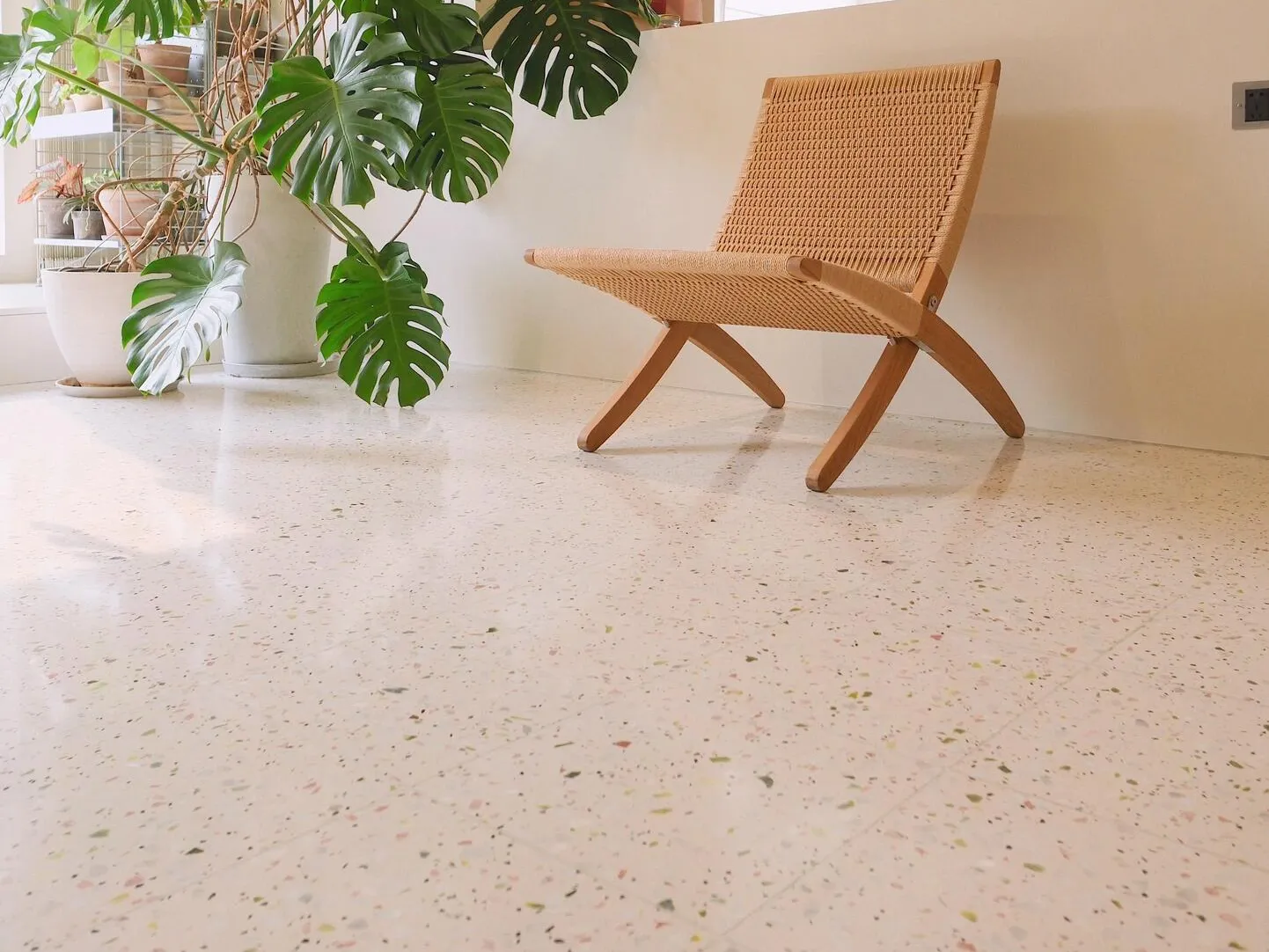
4. Cost Analysis: Short-Term vs. Long-Term
Cost is a big factor. Let’s break down the costs: unit price, installation cost, and long-term maintenance cost.
Unit Price: Traditional Terrazzo Is Cheaper Per Square Meter
On paper, traditional terrazzo has a lower unit price. The raw materials (cement, aggregates) are cheap. It usually costs $20-$40 per square meter.
Terrazzo tiles are more expensive. The unit price ranges from $30-$80 per square meter. High-end options can be even more costly.
Installation Cost: Traditional Terrazzo Is Higher
Traditional terrazzo’s installation is complex. It requires skilled workers. The process includes mixing, pouring, leveling, curing, grinding, and polishing. The installation cost is $50-$80 per square meter.
Terrazzo tiles are easy to install. It’s similar to installing regular ceramic tiles. The installation cost is $20-$40 per square meter.
Total initial cost (unit + installation): Traditional terrazzo is $70-$120 per square meter. Terrazzo tiles are $50-$120 per square meter. They are roughly the same, or tiles are cheaper in some cases.
Long-Term Maintenance Cost: Tiles Have a Big Advantage
This is where the gap widens. Traditional terrazzo needs regular waxing and re-polishing. The annual maintenance cost is $10-$20 per square meter. Over 10 years, that’s $100-$200 per square meter.
Terrazzo tiles have almost no maintenance cost. The only cost is cleaning supplies. Over 10 years, it’s less than $10 per square meter.
In the long run, terrazzo tiles are much cheaper.
5. Final Choice: Which One Should You Pick?
The choice depends on your needs. Let’s summarize based on different scenarios.
Choose Traditional Terrazzo If:
1. You have a large commercial space (over 1000 square meters). You want a seamless surface.
2. Customization is key. You need unique colors, patterns, or logos.
3. You have a tight initial budget. You don’t mind spending on long-term maintenance.
4. You prefer the "authentic" look of handcrafted terrazzo.
Choose Terrazzo Tiles If:
1. You need a material for your home. You want quick installation and no mess.
2. Environmental friendliness is important to you. You prefer low-CO₂ products.
3. You want low maintenance. You don’t have time for regular waxing and polishing.
4. You need versatility. You want to use it on both floors and walls.
5. You care about long-term cost. You want a durable material that saves money over time.
Bonus: Common Myths Debunked
Myth 1: Traditional terrazzo is more durable.
Fact: No. Terrazzo tiles have better wear resistance. They last longer without losing their appearance.
Myth 2: Terrazzo tiles don’t look like real terrazzo.
Fact: Modern terrazzo tiles mimic traditional terrazzo perfectly. The texture and color are almost identical.
Myth 3: Traditional terrazzo is more eco-friendly.
Fact: No. Terrazzo tiles use recycled materials. They also have lower carbon emissions during production.
Conclusion
Traditional terrazzo and terrazzo tiles both have their merits. Traditional terrazzo is great for large, customized commercial spaces. Terrazzo tiles are better for most homes and commercial spaces. They are more durable, eco-friendly, and cost-effective in the long run.
Before you decide, ask yourself: What’s my main priority? Is it customization, speed, maintenance, or cost? Once you answer that, the choice becomes easy.