



Marble Buying Guide: How to Buy Good Marble
2026-01-05 09:45Marble is a highly sought-after decorative material for both residential and commercial spaces, thanks to its natural texture, warm color, and excellent decorative effect. When it comes to Marble Purchase, understanding how to assess Marble Quality is crucial, as this material is widely used for floors, walls, countertops, and more. However, the market offers a wide range of Marble with varying quality, making it easy for buyers to make mistakes during Marble Selection. This marble buying guide outlines key tips to help you avoid pitfalls and choose high-quality Marble. It covers essential topics like Marble Selection skills and Marble Quality identification methods, ensuring you find the perfect material effortlessly.
1. Clarify Your Needs: Choose the Right Type of Marble First
Artificial marble is made by pressing natural marble scraps, resin, and other materials. It has high hardness, strong stain resistance, and is relatively affordable, making it suitable for high-frequency use areas prone to stains, such as kitchen countertops and bathroom walls. However, artificial marble has regular textures and lacks the natural feel of natural marble. When purchasing, choose products with high environmental protection ratings to avoid formaldehyde exceeding the standard.
2. Master Core Identification Skills: 4 Steps to Spot High-Quality Marble
Step 1: Check the appearance and texture. High-quality natural marble has clear, smooth natural textures, with no obvious defects, cracks, color spots, or pinholes. Low-quality marble has blurred textures, may have obvious repair traces, or even be broken and spliced. When purchasing, observe closely or use a flashlight to check for uneven surfaces. For artificial marble, ensure the texture looks natural and avoid products with overly rigid or repeated patterns.
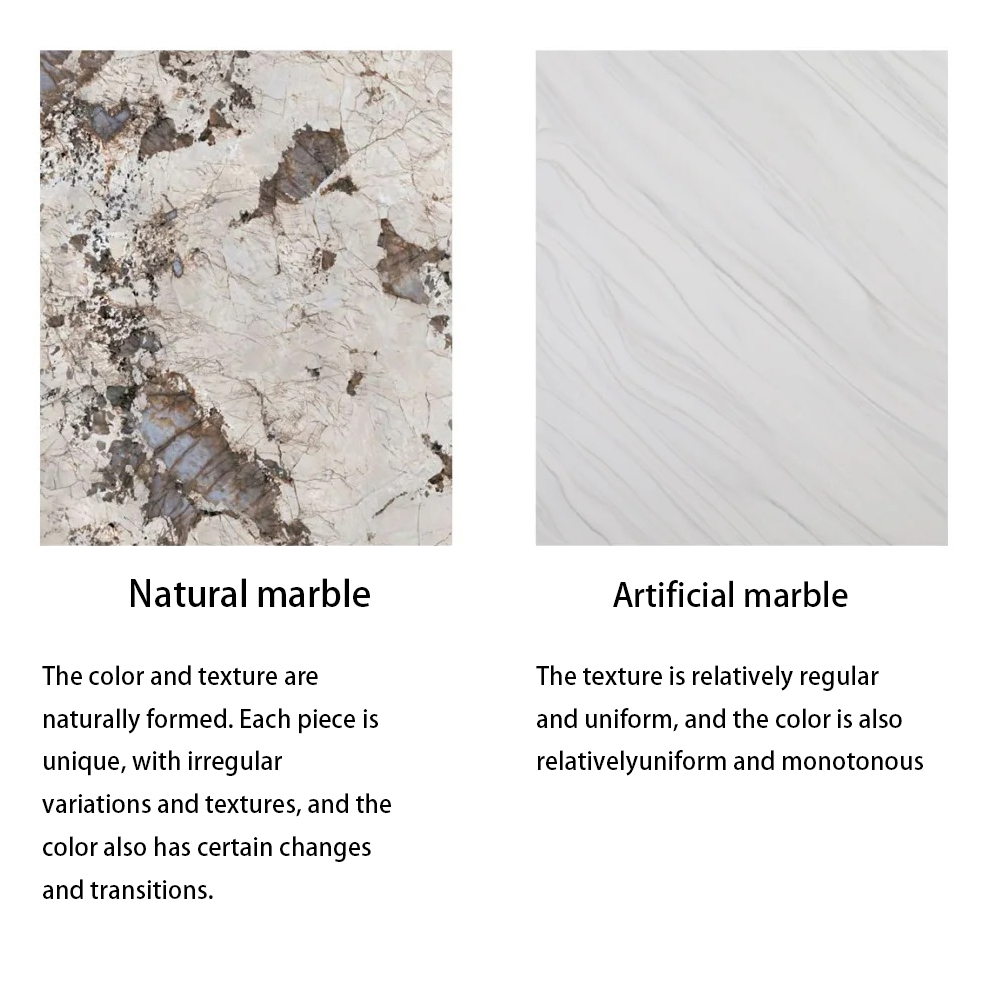
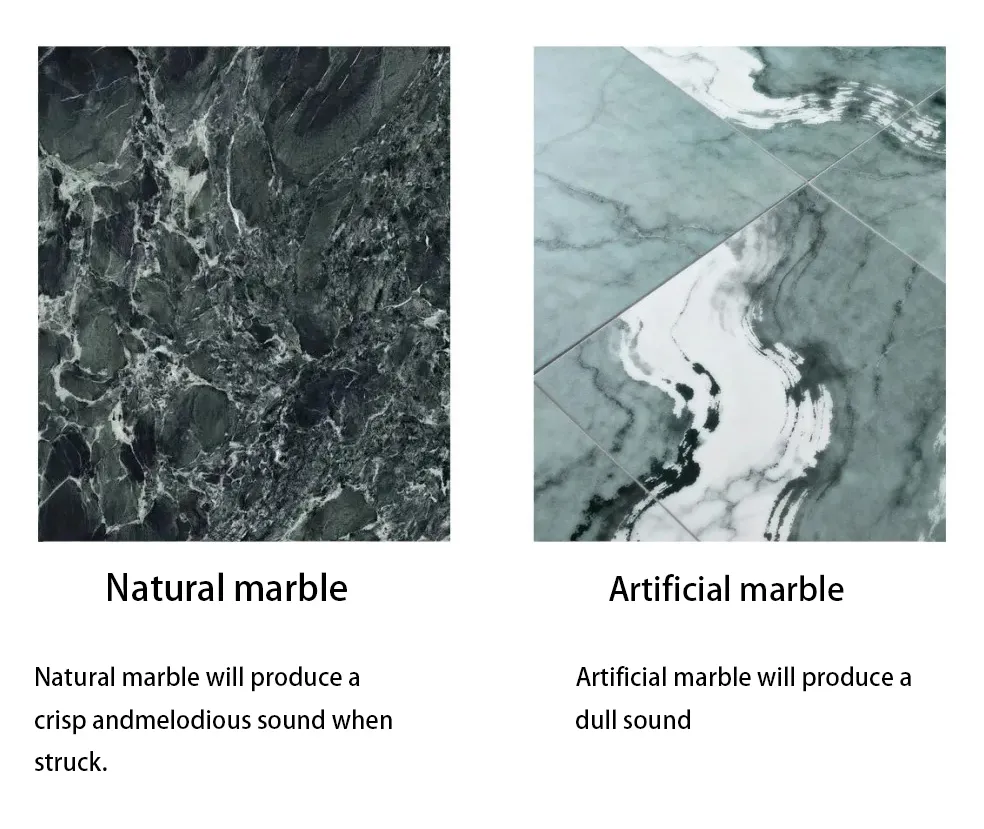
Step 2: Feel the surface texture. High-quality marble has a smooth, delicate surface after fine polishing, with no roughness. Low-quality marble has poor polishing, so the surface may feel grainy or even have burrs. At the same time, tap the marble with your hand: high-quality marble makes a crisp, pleasant sound, while low-quality marble makes a dull, muffled sound due to loose internal structure or cracks.
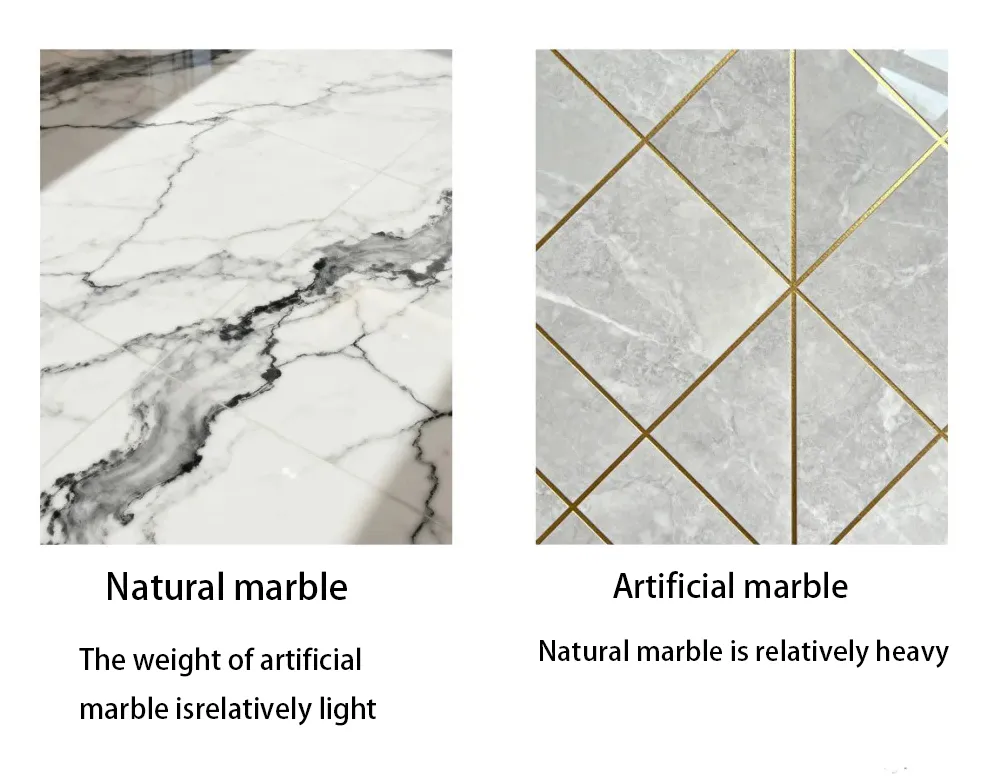
Step 3: Conduct simple tests. Stain resistance is an important indicator of marble quality. Carry easy-to-stain liquids like ink or soy sauce, drop a small amount on an inconspicuous corner of the marble, let it stand for 10 minutes, then wipe it off. High-quality marble (especially those with protective treatment) leaves no obvious marks. If stains remain, it indicates low density or lack of protection, meaning poor quality. In addition, natural marble has high density and is heavier for the same size, so you can judge by weighing it.
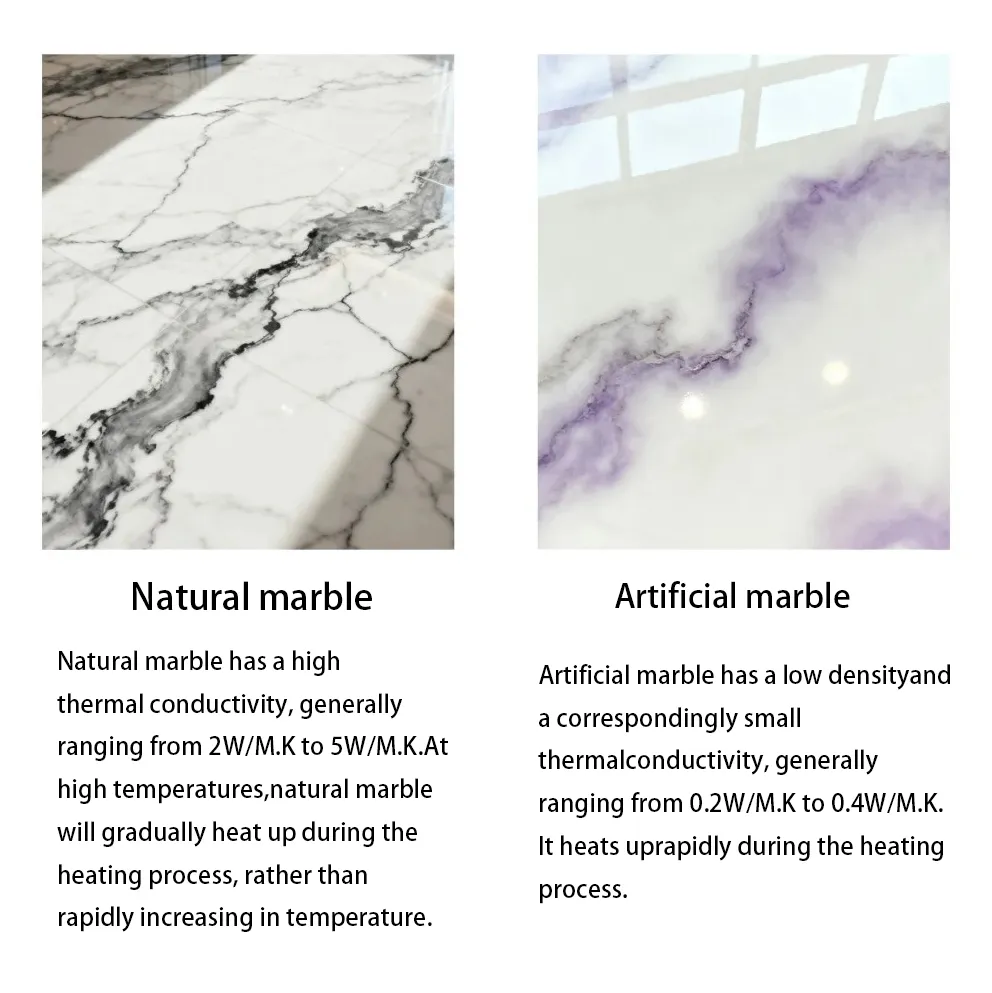
Step 4: Natural marble has a high thermal conductivity, typically between 2 W/m·K and 5 W/m·K. At high temperatures, natural marble heats up gradually rather than rapidly. Artificial marble has a lower density and a correspondingly lower thermal conductivity, typically between 0.2 W/m·K and 0.4 W/m·K. Artificial marble heats up rapidly during heating. This is also a very simple testing method.
3. Avoid These Purchasing Traps: A Must-Read for Beginners
Trap 2: Confusing concepts. Merchants may pass artificial marble off as natural marble, or use other stones like quartz stone (Quartzite) or engineering stone (Engineered Stone) as marble. Ask for product test reports to confirm the stone type. Remember: natural marble has unique textures, while artificial stone has repeated patterns.
Trap 3: Low-price temptation. High-quality marble has high mining and processing costs, so the price is relatively high. If you encounter marble with a price much lower than the market average, be alert—it’s likely low-quality or defective. In addition, check for hidden fees such as processing fees, transportation fees, and installation fees. Clarify all costs in advance.