Nothing elevates a dining space quite like a marble dining table. Its timeless elegance, natural beauty, and unique veining add a touch of luxury that complements any interior style—from modern minimalism to classic traditional. But with so many marble types available, choosing the right one for your dining table can feel overwhelming.
Not all marbles are created equal. Some are more durable for daily use, while others are prized for their aesthetic appeal. Factors like porosity, hardness, maintenance needs, and cost all play a role in determining which marble is best suited for a dining table—where spills, scratches, and regular use are inevitable.
In this guide, we’ll break down thetop marble types for dining tables, their key characteristics, pros and cons, and what makes each one stand out. We’ll also share expert tips to help you choose the perfect marble for your home, ensuring your marble dining table is both beautiful and functional.
By the end, you’ll have all the information you need to make an informed decision that aligns with your style, budget, and lifestyle—so you can pick the best marble for your dining table.
The Best Marble Types for Dining Tables (Ranked by Suitability)
Now that you know what to look for, let’s explore the top marble types for dining tables—each selected for its suitability as a marble dining table material.
We’ve ranked them based on durability, maintenance, aesthetic appeal, and overall suitability for daily use—so you can find the perfect fit for your home and choose the best marble for your dining table.
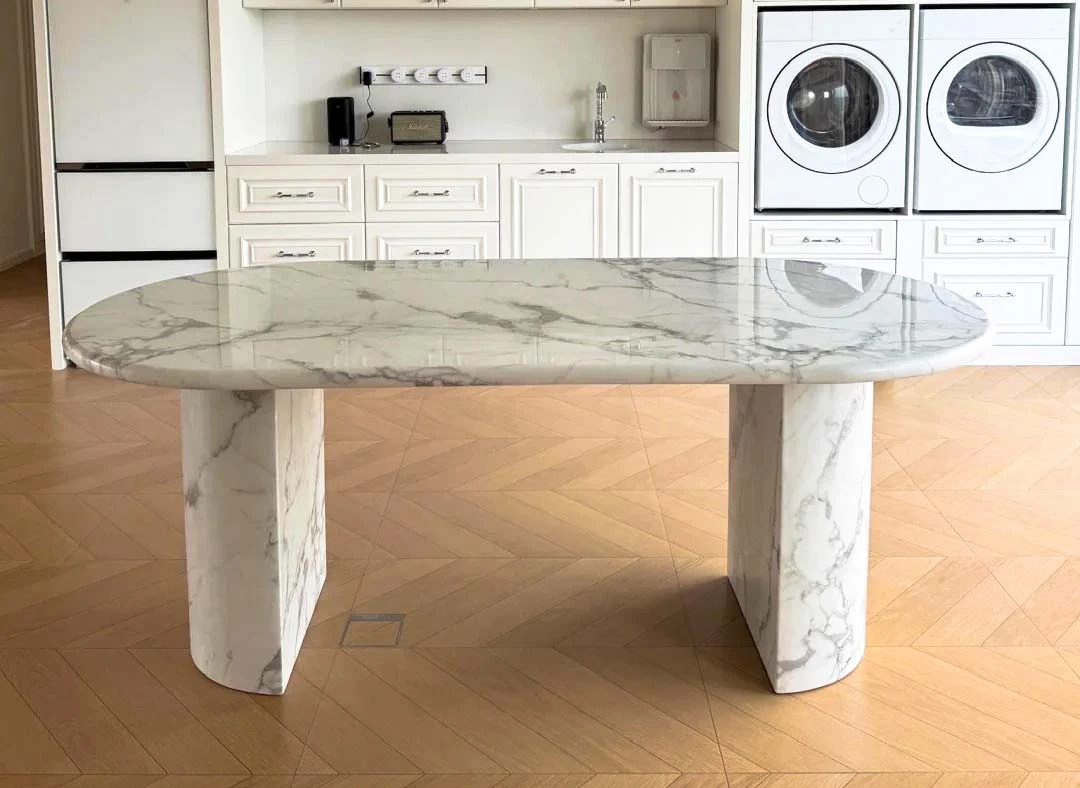
1. Calacatta Marble – Luxury with Timeless Appeal
Origin: Tuscany, Italy
Key Characteristics: Calacatta marble is one of the most sought-after marbles in the world, known for its bright white base and bold, dramatic gray or gold veining. It’s a type of white marble with a high calcium carbonate content, giving it a creamy, luxurious appearance.
Calacatta is slightly less porous than other white marbles and has a Mohs hardness of 3-4, making it durable enough for dining tables.
Pros:
Stunning aesthetic that adds luxury to any dining space
Less porous than other white marbles (e.g., Carrara)
Timeless design that never goes out of style
Complements both modern and traditional interiors
Cons:
One of the most expensive marble types (luxury budget)
Requires regular sealing (every 6-12 months) to prevent staining
Light base may show scratches and spills more easily
Best For: Homeowners who want a luxury, statement-making dining table and don’t mind investing in maintenance.
Perfect for formal dining rooms or spaces where the table is a focal point.
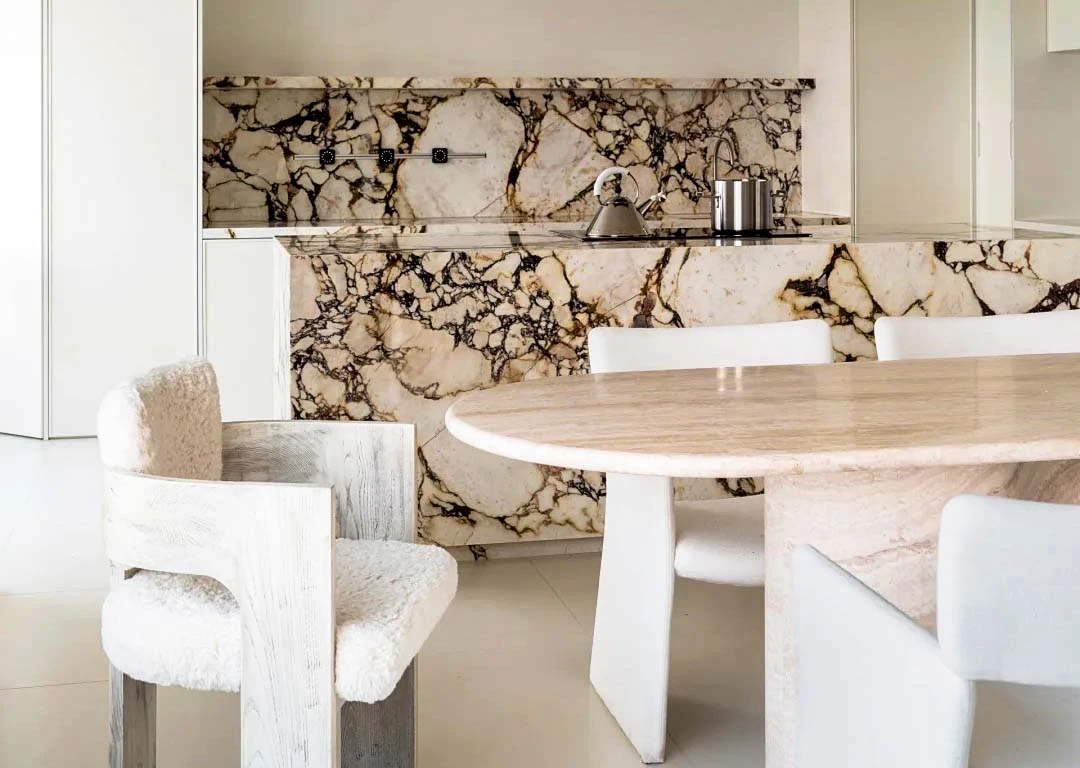
2. Carrara Marble – Classic & Affordable
Origin: Carrara, Italy (Tuscany)
Key Characteristics: Carrara marble is the most popular and widely available white marble, known for its soft white base and subtle gray veining. It’s a classic choice for dining tables, with a timeless, elegant look that fits almost any interior style.
Carrara has a Mohs hardness of 3-4 and is slightly more porous than Calacatta, so it requires regular sealing.
Pros:
Affordable (mid-range budget) compared to other Italian marbles
Classic, versatile design that complements any decor
Widely available, making it easy to source
Soft veining adds warmth without being too dramatic
Cons:
More porous than Calacatta, so it’s prone to staining if not sealed
Requires sealing every 6 months (more frequent than Calacatta)
Subtle veining may be too plain for those who want a bolder look
Best For: Homeowners on a mid-range budget who want a classic, elegant dining table.
Great for both formal and casual dining spaces, and pairs well with modern, bohemian, or traditional decor.
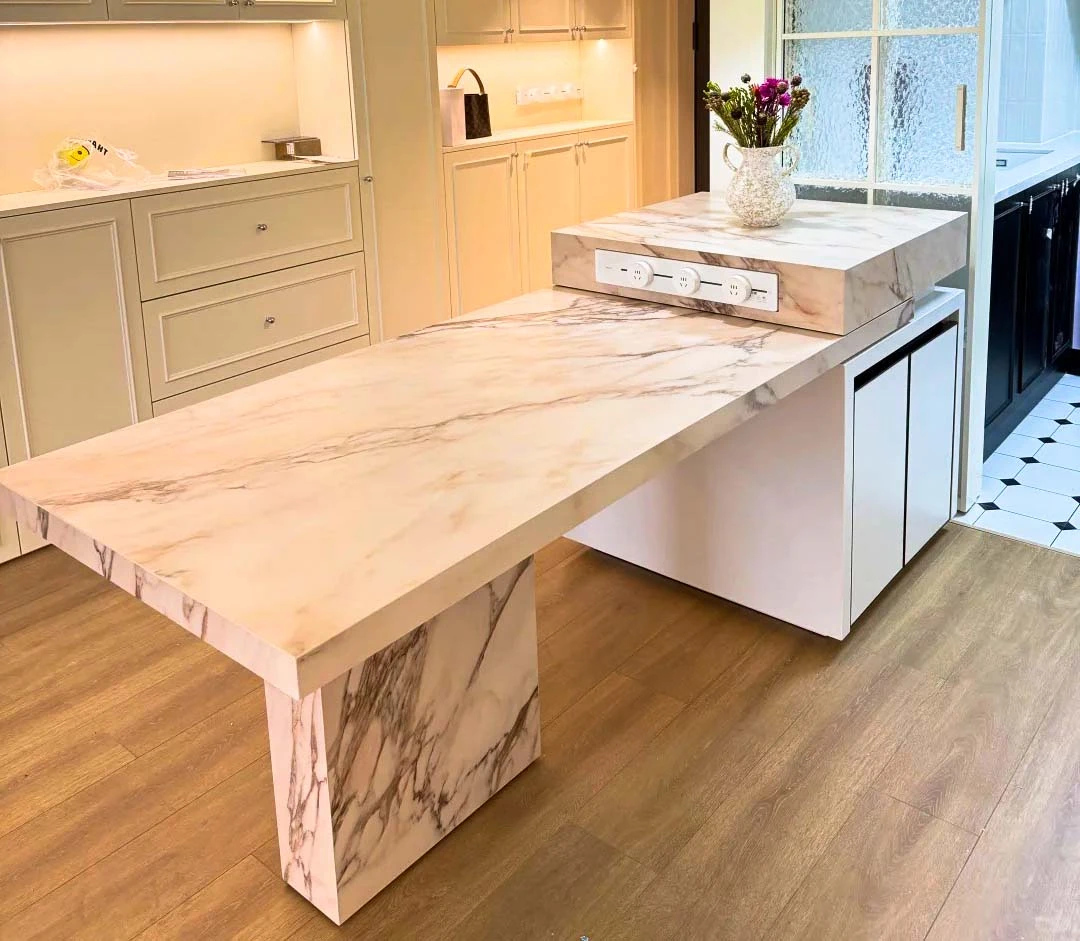
3. Statuario Marble – Bold & Dramatic
Origin: Carrara, Italy
Key Characteristics: Statuario marble is a premium white marble with a bright, almost translucent base and bold, thick gray veining. It’s similar to Calacatta but has more dramatic veining, often forming swirling patterns that make each slab unique.
Statuario has a Mohs hardness of 3-4 and is slightly less porous than Carrara, making it a durable choice for dining tables.
Pros:
Dramatic, eye-catching veining that makes a statement
Bright white base that brightens up dining spaces
Durable enough for daily use (with proper maintenance)
Luxurious appearance without the same price tag as Calacatta
Cons:
More expensive than Carrara (mid-to-luxury budget)
Requires regular sealing (every 6-12 months)
Bold veining may clash with busy decor styles
Best For: Homeowners who want a bold, statement-making dining table with a luxurious look.
Perfect for modern or contemporary dining rooms where the table is the focal point.
4. Nero Marquina Marble – Sleek & Modern
Origin: Markina-Xemein, Spain
Key Characteristics: Nero Marquina is a black marble with a smooth, polished surface and striking white veining. It’s a sleek, modern choice that adds contrast and sophistication to any dining space.
Nero Marquina has a Mohs hardness of 3-4 and is less porous than most white marbles, making it easier to maintain and less prone to staining.
Pros:
Sleek, modern look that complements contemporary decor
Black base hides scratches and spills better than white marbles
Less porous, so it requires less frequent sealing (every 12-18 months)
Striking white veining adds visual interest without being overwhelming
Cons:
More expensive than Carrara (mid-to-luxury budget)
Direct sunlight may cause fading over time
White veining can show dust more easily
Best For: Homeowners who prefer a modern, sleek aesthetic.
Perfect for contemporary dining rooms, open-concept spaces, or anyone who wants a table that hides imperfections well.
5. Crema Marfil Marble – Warm & Inviting
Origin: Alicante, Spain
Key Characteristics: Crema Marfil is a beige or cream-colored marble with subtle gold, brown, or gray veining. It’s a warm, inviting choice that adds a cozy touch to dining spaces, making it perfect for casual or family-friendly homes.
Crema Marfil has a Mohs hardness of 3-4 and is slightly porous, requiring regular sealing.
Pros:
Warm, neutral color that hides stains and scratches better than white marbles
Versatile design that complements bohemian, traditional, or coastal decor
Mid-range budget, more affordable than Calacatta or Statuario
Soft veining adds warmth and texture without being too bold
Cons:
Requires regular sealing (every 6-12 months)
Cream color may fade over time with direct sunlight
Less dramatic than white or black marbles (not ideal for statement pieces)
Best For: Families, busy households, or anyone who wants a warm, low-key dining table.
Perfect for casual dining rooms, kitchens, or open-concept spaces.
Honorable Mentions: Other Marbles to Consider
While the above marbles are the best for dining tables, there are a few other options worth mentioning if you’re looking for something unique:
Emperador Marble (Spain)
A dark brown marble with gold or beige veining. It’s durable, less porous, and has a warm, rich appearance. Great for traditional or rustic decor, but it may fade in direct sunlight.
Marble Cultured Stone
If you love the look of marble but want a more affordable, low-maintenance option, cultured marble (man-made) is a great choice. It’s non-porous, scratch-resistant, and comes in a variety of colors and patterns.
However, it doesn’t have the same natural beauty and uniqueness as real marble.
Expert Tips for Maintaining Your Marble Dining Table
No matter which marble you choose, proper maintenance is key to keeping your dining table looking beautiful for years to come.
Here are our top tips:
Seal it regularly: Most marbles need to be sealed every 6-12 months (or 12-18 months for less porous types). Use a high-quality stone sealer to reduce porosity and prevent staining.
Clean spills immediately: Wipe up spills (especially wine, oil, and acidic liquids like lemon juice) with a soft, damp cloth as soon as they happen. Avoid letting liquids sit on the surface.
Use coasters and placemats: Protect the surface from scratches, heat, and spills by using coasters for drinks and placemats for plates and utensils.
Clean gently: Use a mild, pH-neutral cleaner (avoid harsh chemicals like bleach, ammonia, or vinegar) and a soft cloth to clean the surface. Avoid scrubbing with abrasive sponges.
Avoid direct sunlight: Long-term exposure to direct sunlight can cause marble to fade or yellow. Use curtains or blinds to protect your table if it’s near a window.
Final Verdict: Which Marble Is Best for You?
The best marble for your dining table depends on your style, budget, and lifestyle. Here’s a quick recap to help you decide:
Best for luxury & statement: Calacatta Marble
Best for classic & affordable: Carrara Marble
Best for bold & dramatic: Statuario Marble
Best for modern & low-maintenance: Nero Marquina Marble
Best for warm & family-friendly: Crema Marfil Marble
No matter which marble you choose, a marble dining table is an investment that will add beauty and value to your home for years to come.
With proper maintenance, it will remain a timeless centerpiece of your dining space.
FAQs About Marble Dining Tables
Is marble a good choice for a dining table?
Yes! Marble is a great choice for dining tables because it’s elegant, durable (with proper maintenance), and versatile. It complements any interior style and adds a touch of luxury to your space.
Just be sure to choose a marble type that fits your lifestyle (e.g., less porous for busy households).
Which marble is the most durable for dining tables?
Nero Marquina and Calacatta are among the most durable marbles for dining tables, as they are less porous and have a Mohs hardness of 3-4. They can withstand regular use, spills, and scratches (with proper care).
Do marble dining tables stain easily?
Most marbles are porous, so they can stain if not sealed properly. However, less porous marbles (e.g., Nero Marquina, Calacatta) are less prone to staining. Regular sealing and wiping up spills immediately will help prevent stains.
How much does a marble dining table cost?
The cost of a marble dining table varies widely based on the marble type, size, and quality. Carrara marble tables are the most affordable (mid-range), while Calacatta and Statuario are luxury options.
Expect to pay anywhere from $500 to $5,000+ for a marble dining table.