



The Story of Stone: Carrara
2025-10-30 15:50 Carrara, a city sculpted from white marble, is like an open-air art museum. Its marble quarries were favored by great Renaissance artists such as Michelangelo and Canova, who drew inspiration and materials from these mountains to create world-renowned sculptures and architecture. Today, Carrara remains famous for its shimmering white treasures, a symbol of Italian and global stone art.
A City Born of Marble
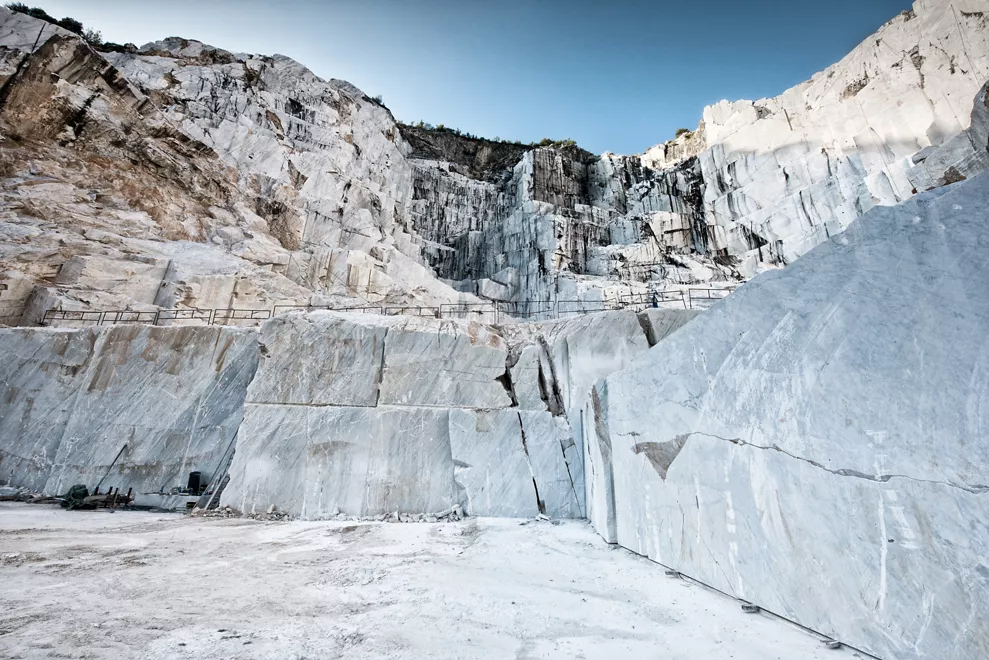
The city blends seamlessly with the Alps, its rolling hills shimmering with white silhouettes amidst the swirling clouds. The white of the mountains and the white of the marble reflect each other under the sunlight, like a grand painting jointly created by nature and humankind. Carrara's destiny began with marble, and it flourished because of marble.
Since Roman times, Carrara has been an important colony. The Romans quickly recognized its strategic value and mineral potential, and began systematically mining these precious white stones for the construction of temples, columns, statues, and palaces. However, centuries of foreign rule did not change the free and resilient character of the people of Carrara. The locals are known for the anarchistic spirit of their quarrying community, valuing independence, courage, and creativity. Over time, they have forged a unique cultural character through hard stone and arduous labor.
Marble and the Soul of the City
To this day, Carrara and the entire Massa-Carrara province remain renowned for their rich deposits of high-quality marble. Strolling through the city, almost everything one sees is inextricably linked to marble.
Starting with the magnificent Carrara Cathedral, a fusion of Romanesque and Gothic architectural styles, its interior preserves 15th and 16th-century frescoes and sculptures. The cathedral's facade, rose windows, railings, and pulpit are all crafted from Carrara marble; the pristine white stone shimmers softly in the sunlight, seemingly telling a story of time.
Stepping outside the cathedral, the city's squares and fountains are equally breathtaking. The fountains in Plaza Alberica and the decorations of the surrounding palaces are primarily made of marble; the delicate carvings and noble texture imbue the entire square with elegance and power.
Journey to the Marble Quarries
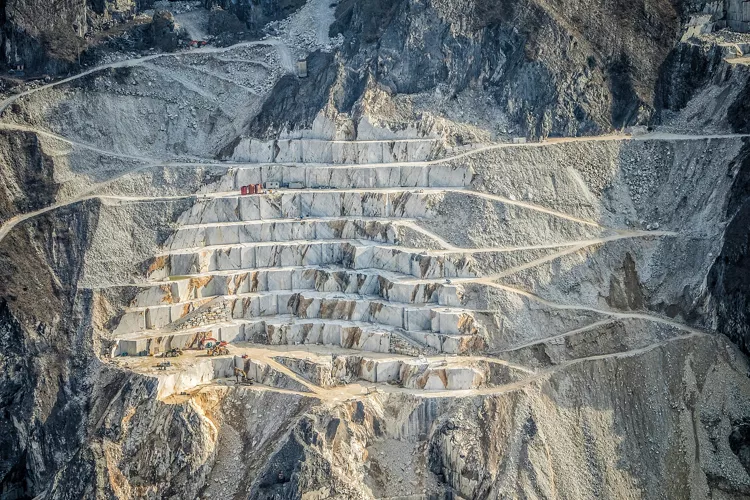
For every traveler to Carrara, visiting the marble quarries is almost a pilgrimage. The journey typically begins at the Marble Civic Museum, established in the 1980s, which houses a vast collection of ancient quarrying tools, manuscripts, and precious archaeological artifacts. Here, visitors can learn about the history of the Carrara quarrying industry and follow the road leading into the mountains, crossing the Vara Bridge and tunnels carved into the rock, gradually approaching the quarry that nurtured art and history.
Stones and Memories of People in the Mountains
Following the winding mountain roads of the Apuan Alps, one arrives at Campocecina. This is not only a great place for sightseeing but also a meeting point of poetry and memory. The famous "Poets' Quarry" is located here, with inscriptions by poets and artists on the stone walls, paying homage to the stones of Carrara and paying profound respect to the laborers of this land.
In the nearby "Parco della Memoria," several 20th-century sculptures stand, works created by an international sculpture symposium to commemorate the victims of the Holocaust. Each stone seems to whisper, recounting the pain of history and humanity's undying hope.
The Eternal Song of Stone
Carrara is not just a city, but a narrative about time, nature, and human art. Here, the stones, weathered by millennia, still gleam with a pure white light. From the colonnades of ancient Rome to the sculptures of the Renaissance, and to the modern architecture of today, Carrara marble has witnessed the evolution of human civilization and embodies the eternal pursuit of beauty by artists and craftsmen.
As Michelangelo once said, "I see angels sleeping in marble; I simply remove the superfluous parts." In Carrara, this statement is not only a creative philosophy but also a belief in life.