Marble is at the heart of global architectural and design projects—valued for its timeless beauty, long-lasting durability, and ability to fit seamlessly into spaces ranging from luxury homes to commercial buildings around the world.
Understanding how marble forms geologically isn’t just technical knowledge—it’s a way to appreciate the unique quality and character of each slab, helping you make informed choices when selecting natural marble for your projects.
Unlike igneous or sedimentary rocks, marble is a metamorphic rock—shaped by extreme heat and pressure over millions of years. Below, we’ll walk you through its formation process, how that process defines quality, and share practical insights to guide your marble selection.
1. The Foundation: Limestone – Marble’s Parent Rock
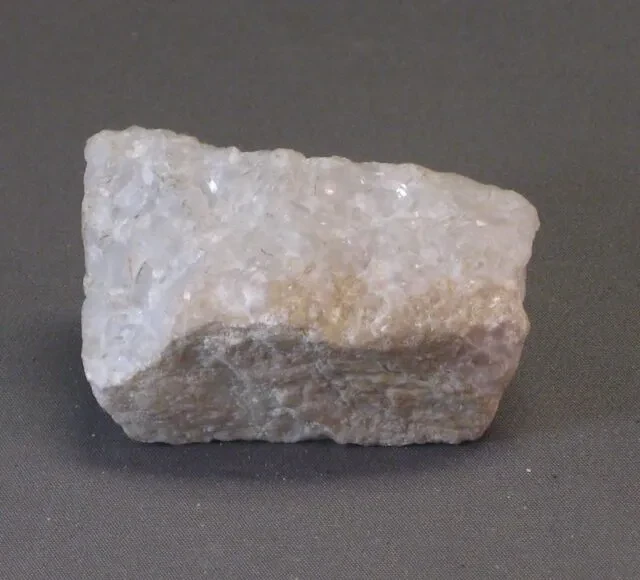
All marble starts as limestone, a sedimentary rock made from the buildup of calcium-rich marine life—such as coral, mollusks, and algae—on the floors of ancient oceans. Over thousands of years, these organic remains get crushed under layers of sediment above them, hardening into solid limestone. It’s mostly made of calcium carbonate (CaCO₃) in the form of calcite, which is what eventually transforms into the high-quality marble you know.
The purity of the original limestone directly defines marble quality. Limestone that’s high in purity (and low in impurities) produces top-tier white marbles like Italy’s Calacatta or Greece’s Thassos—stones highly sought after for luxury projects worldwide.
On the other hand, trace minerals in limestone create the colorful marbles we know—like Rosa Verona or Nero Marquina—that fit different interior design trends across the globe. Consistent limestone composition ensures the marble you select will have uniform quality and character, ideal for cohesive project outcomes.
2. Metamorphism: What Makes Marble Truly Exceptional
Marble forms through regional metamorphism, which happens when tectonic plates collide and push limestone deep into the Earth’s crust. Down there, the rock is exposed to temperatures between 300–500°C (572–932°F) and pressure of 10–15 kilobars—conditions that trigger calcite recrystallization and mineral changes, turning plain limestone into the natural marble prized for design projects.
Recrystallization: The small, scattered calcite crystals in limestone break down and re-form into larger, interlocked crystals. This gets rid of pores, creating the dense, smooth surface that polishes so well—perfect for luxury commercial builds or high-end furniture.
Mineral Transformation: Pure calcite stays the main mineral in white marble, while trace minerals—like iron oxides, graphite, and clay—undergo chemical changes that bring out color and veining. This consistent process ensures batches of marble have uniform quality, so your project maintains a cohesive look.
3. Veining & Color: The Unique Signature of Each Marble Slab
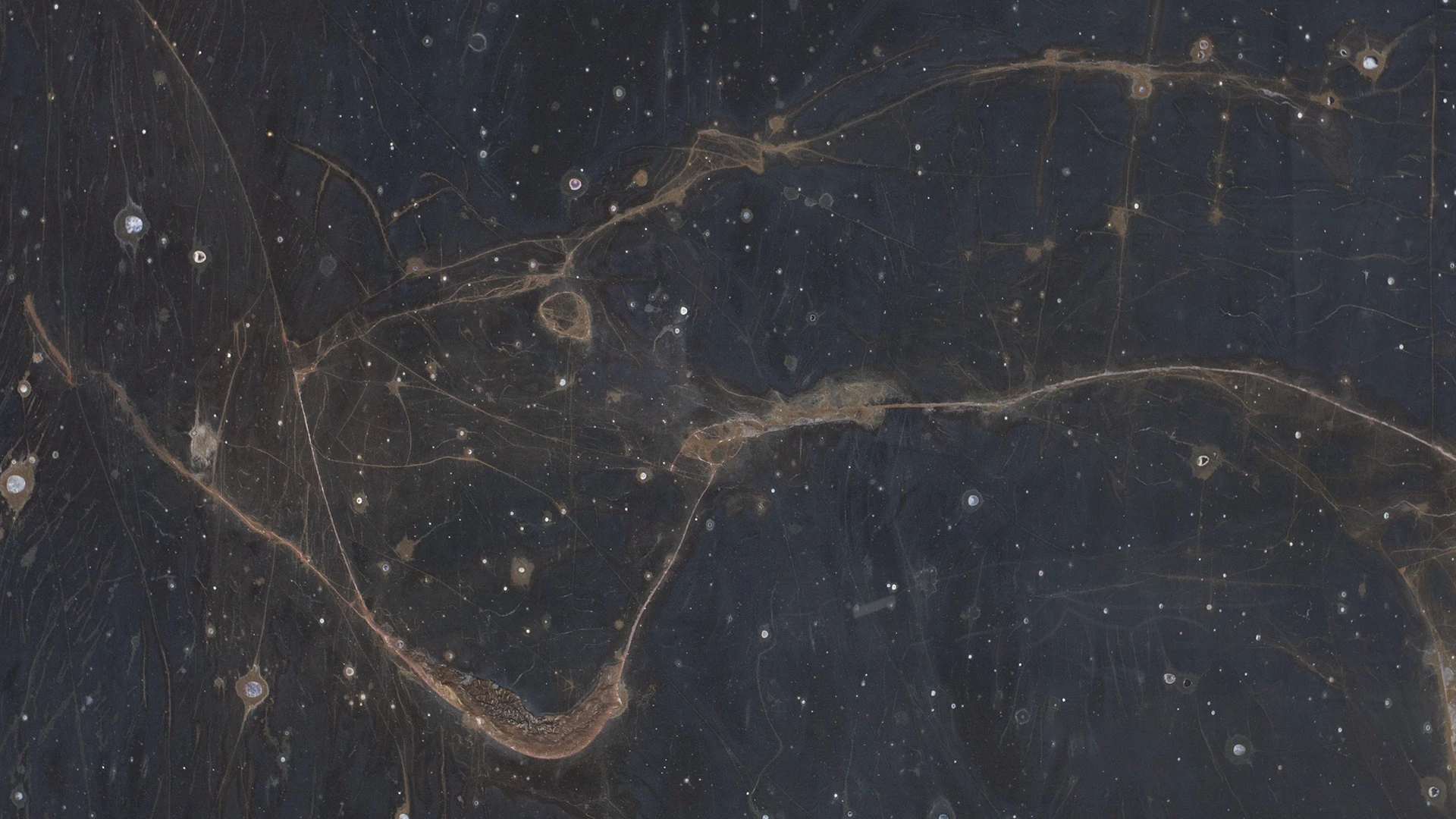
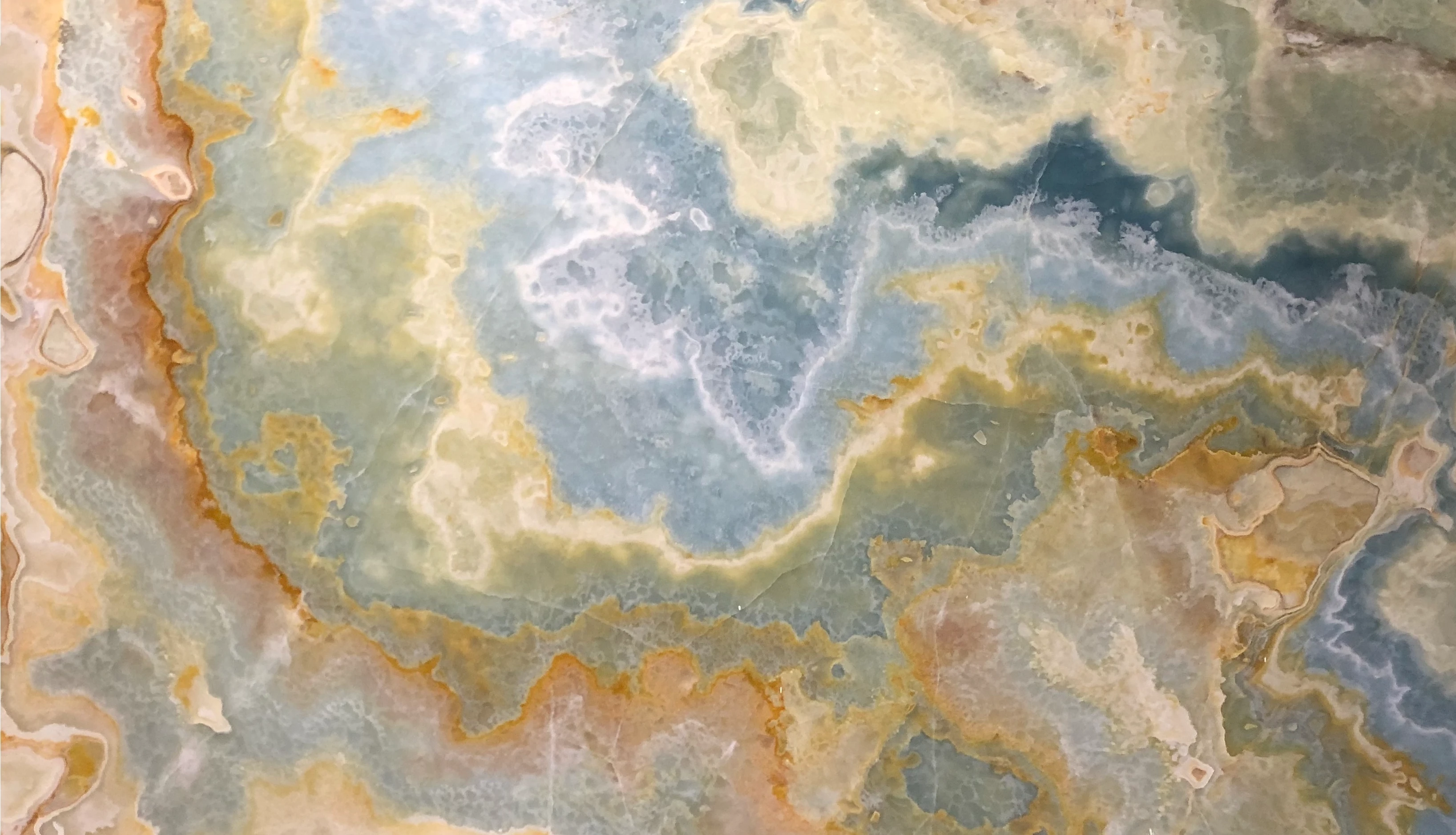
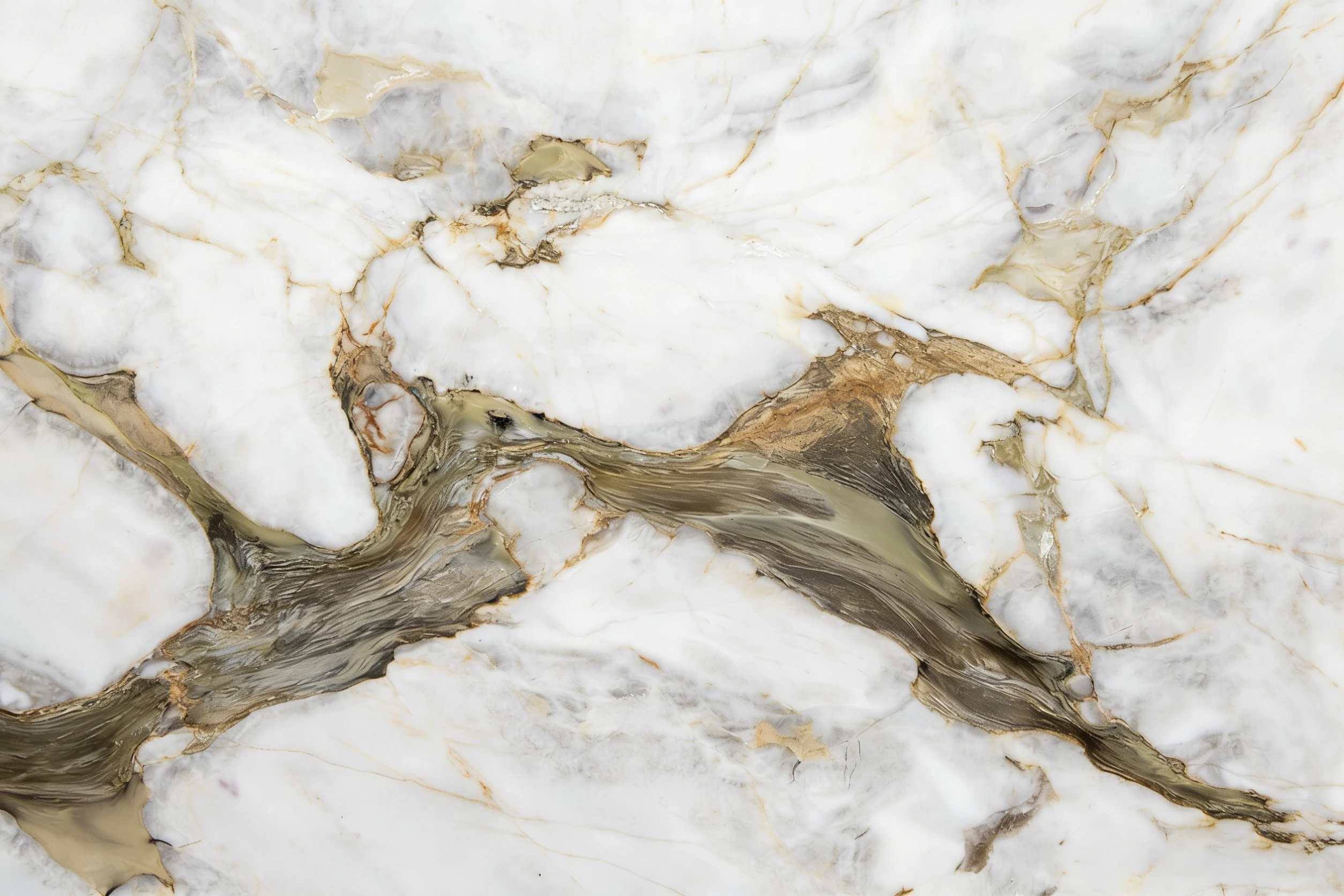
Marble’s unique veining and color are what make it a standout choice for design—each pattern is a result of its geological formation, and you can select styles that perfectly elevate your projects.
Preferences vary by region: European interiors tend to favor subtle veining, while Asian projects often go for bolder patterns. No matter your design vision, there’s a marble with veining that aligns with your goals.
These color and veining features come from impurities in the original limestone, making each slab one-of-a-kind. Additionally, the speed of metamorphism further refines these traits, adding to marble’s uniqueness.
Iron oxides: Give marbles red, pink, or yellow shades (like Rosa Verona or Jaipur Pink Marble), popular for homes and hotels.
Manganese/graphite: Create gray or black veins (like Nero Marquina or Gray Bardiglio), in high demand for modern commercial spaces.
Clay/silica: Result in green or brown tones (like Verde Guatemala), perfect for outdoor landscaping and building facades.
Slow metamorphism leads to larger crystals and bolder veining, while faster cooling creates finer-grained marble—both options cater to different design preferences, ensuring you find the right fit for your project.
4. From Underground to Your Project: The Journey of Marble
Once marble forms deep underground, tectonic uplift pushes it up to the Earth’s surface. Over time, erosion uncovers marble deposits, and these quarries are where the finest marble is sourced. Famous quarries around the world—like those in Carrara (Italy), Xiamen (China), and Thassos (Greece)—have the perfect metamorphic conditions to produce consistent, high-quality marble for global projects.
Ethical and efficient quarrying ensures the marble you receive is sustainably sourced, a priority for many modern design and construction projects.
Modern techniques, like diamond wire cutting, keep marble slabs intact, reduce waste, and ensure the stone arrives in perfect condition—ready to be incorporated into your project.
5. Marble Quality: How Formation Impacts Your Project
Understanding how marble forms helps you distinguish high-quality slabs from lower-quality options, ensuring your project meets the standards you expect.
High-grade marble: Has a uniform crystal structure, few fractures, and consistent veining—all from pure limestone and balanced metamorphism. These slabs command higher value, making them ideal for luxury hotels and high-end homes worldwide.
Industrial-grade marble: Is more porous with irregular veining, making it suitable for landscaping or budget-friendly construction projects. It’s a cost-effective option for projects where luxury finishes aren’t the priority.
Marble’s calcium carbonate makeup means it’s sensitive to acid—we recommend sharing this detail with your maintenance team, along with personalized care tips, to keep your marble looking its best for years to come.
6. Why Marble’s Story Matters for Your Projects
Every slab of marble carries a unique geological story, shaped by millions of years of natural processes. This connection to nature adds depth and character to your projects, setting them apart from those using man-made materials.
When you choose marble, you’re not just selecting a building material—you’re incorporating a natural work of art that brings timeless elegance to any space.
Linking marble’s formation to its quality (for example, knowing Carrara marble’s unique veining comes from slow metamorphism) helps you make intentional choices that align with your design vision and project goals.
Final Thoughts
Marble’s formation—from ancient ocean deposits to tectonic pressure—is what makes it one of the most beloved materials in architecture and design. Its unique combination of beauty, durability, and uniqueness comes directly from these natural processes.
Whether you’re designing a luxury hotel, a modern commercial space, or a high-end home, marble’s natural story and exceptional quality make it a choice that stands the test of time.