



Why High-Performance Terrazzo Floors Are Perfect for Airports and Hospitals
2025-11-06 16:33
Introduction: Performance and Design Needs
In high-traffic public spaces such as airports and hospitals, floors must not only be aesthetically pleasing but also withstand continuous wear and tear from thousands of footsteps daily.
High-performance terrazzo flooring is increasingly becoming standard in airports and hospitals because it perfectly blends durability, sustainability, and design versatility. Unlike traditional ceramic tile or vinyl floors, terrazzo flooring can maintain its shine and integrity for over 40 years.
Modern epoxy terrazzo and engineered terrazzo systems have revolutionized this classic material into a high-tech surface that meets the stringent requirements of 21st-century facilities.
Behind this innovation are experienced experts and terrazzo companies like Dongxing, who continuously improve terrazzo aggregates and R&D technologies to achieve a perfect balance between function and aesthetics.
This article will explore why terrazzo has become the preferred flooring material for public infrastructure and healthcare facilities, focusing on its performance, safety, maintainability, and visual appeal.
1. What makes high-performance terrazzo special?
High-performance terrazzo flooring used in airports and hospitals stands out due to its aggregate and manufacturing process.
Traditional terrazzo materials are inexpensive, but the flooring is dull and lacks shine; even after polishing and waxing, the shine is only temporary.
Epoxy terrazzo flooring solves these problems. It uses epoxy resin as a binder to create a seamless, non-porous surface that is chemically resistant, antibacterial, and wear-resistant.
The epoxy resin matrix bonds tightly to the substrate, forming a strong, seamless floor that can last for over 40 years with proper maintenance.
Engineering terrazzo is another innovation. While engineered terrazzo typically requires customization, our Dongxing engineering projects can be customized starting from 400 square meters.
This allows architects and designers to apply terrazzo to a variety of horizontal and vertical applications—floors, walls, stairs, and countertops.
These modern systems redefine the performance of terrazzo flooring. They are lighter, quicker to install, more durable, and available in hundreds of colors and aggregate combinations.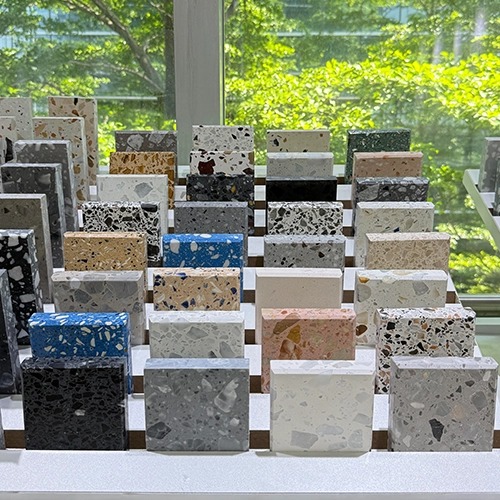
2. Airport Terrazzo Flooring: Performance and Aesthetics Combined
Airports present one of the most demanding challenges for flooring materials. Thousands of passengers traverse the terminal every hour.
Baggage carts, cleaning equipment, and maintenance vehicles exert constant pressure on the floor. In this environment, terrazzo flooring demonstrates unparalleled performance.
2.1 Durability and Lifespan
Unlike vinyl or ceramic tiles, which wear down over time, epoxy terrazzo flooring can withstand decades of pedestrian and vehicular traffic without noticeable damage.
Its dense, smooth surface resists scratches and impacts even in busy terminals or check-in areas.
For example, the terrazzo flooring at Sydney Airport in Australia only requires occasional polishing to restore its shine.
2.2 Aesthetic Flexibility
Airports are often cultural gateways, and their interior design should reflect the city's character.
Terrazzo offers complete design freedom. Aggregates can be stained glass, quartz, marble, or even recycled materials, allowing for the creation of custom patterns, signs, or directional symbols on the floor.
3. Hospital Terrazzo Flooring: Combining Cleanliness and Comfort
In hospitals, flooring performance is directly related to health and safety.
High-performance terrazzo flooring is particularly suitable for medical institutions such as airports and hospitals because it combines clinical-grade hygiene standards with a relaxing aesthetic.
3.1 Infection Control and Hygiene
Hospital floors come into contact with chemicals, disinfectants, and bodily fluids.
Epoxy terrazzo has a non-porous, seamless surface that prevents fluid absorption and bacterial growth.
Unlike vinyl or composite flooring, where seams can harbor pathogens, terrazzo flooring forms a completely sealed system.
This makes routine cleaning faster and more efficient.
Its resistance to chemical corrosion also allows maintenance teams to use hospital-grade cleaning agents without worrying about surface damage.
For critical areas such as operating rooms, corridors, or laboratories, epoxy terrazzo flooring provides a hygiene barrier, contributing to the implementation of overall infection control strategies.
3.2 Comfort and Acoustic Control
Hospitals need to create environments that reduce patient stress and promote recovery.
The smooth, slightly reflective surface of engineered terrazzo helps create bright and open interior spaces.
When used in conjunction with a padding system, terrazzo can also reduce footstep noise, thus improving acoustic comfort—a small but significant detail in rehabilitation spaces.
3.3 Long-Term Cost-Effectiveness
While the initial installation cost of terrazzo may be higher than some alternatives, its long-term value is exceptional.
Terrazzo floors require minimal maintenance and can last for generations, making them one of the most cost-effective flooring systems available.
In places like hospitals where floor replacement would disrupt normal operations, the durability of terrazzo translates directly into savings of time and money.
For example, the epoxy terrazzo at Lucille Packard Hospital in California serves as a canvas for waves and marine life, simulating the California coast.
Crucial in any healthcare facility, in addition to facilitating wheelchair and bed access, seamless floors are easy to maintain, clean, and disinfect.
Furthermore, terrazzo prevents the growth of bacteria, mold, or mildew, ensuring a safe environment for patients.
4. The R&D Principles Behind Epoxy Terrazzo Flooring
Modern epoxy terrazzo flooring perfectly blends design and aggregate science.
Its formula is based on a two-component resin system—a combination of epoxy resin and a curing agent—that creates a beautiful chemical reaction with aggregates such as marble, glass, or granite chips.
This engineered structure offers several advantages:
High compressive strength (over 10,000 psi) ensures structural resilience.
Chemical resistance effectively protects against liquid splashes and cleaning agent erosion.
Thermal stability maintains surface integrity even under varying temperatures.
Color consistency ensures long-term visual harmony for large-area flooring installations.
The final flooring is not only aesthetically pleasing but also performs exceptionally well.
For this reason, most leading terrazzo professionals recommend epoxy systems for high-intensity applications such as commercial and institutional spaces.
5. Engineered Terrazzo: The Future of Sustainable Flooring Materials
As sustainability becomes central to architectural design, engineered terrazzo offers a forward-thinking solution.
These systems typically incorporate recycled aggregates, such as post-consumer glass or recycled stone chips.
In some cases, the adhesive itself also has low volatile organic compound (VOC) content and is environmentally safe.
5.1 Sustainable Production and Installation
Terrazzo manufacturers are now focused on producing environmentally friendly formulations to reduce their carbon footprint.
Terrazzo slabs can be manufactured in controlled environments, minimizing on-site waste and accelerating installation.
5.2 Compatibility with LEED and Green Building Certifications
Due to its long lifespan, recycled material content, and low maintenance requirements, terrazzo can contribute significantly to LEED and other green building certification programs.
High-performance terrazzo flooring is an ideal flooring solution for airports and hospitals pursuing sustainability goals.
6. Case Studies: Examples of Terrazzo in Practical Applications
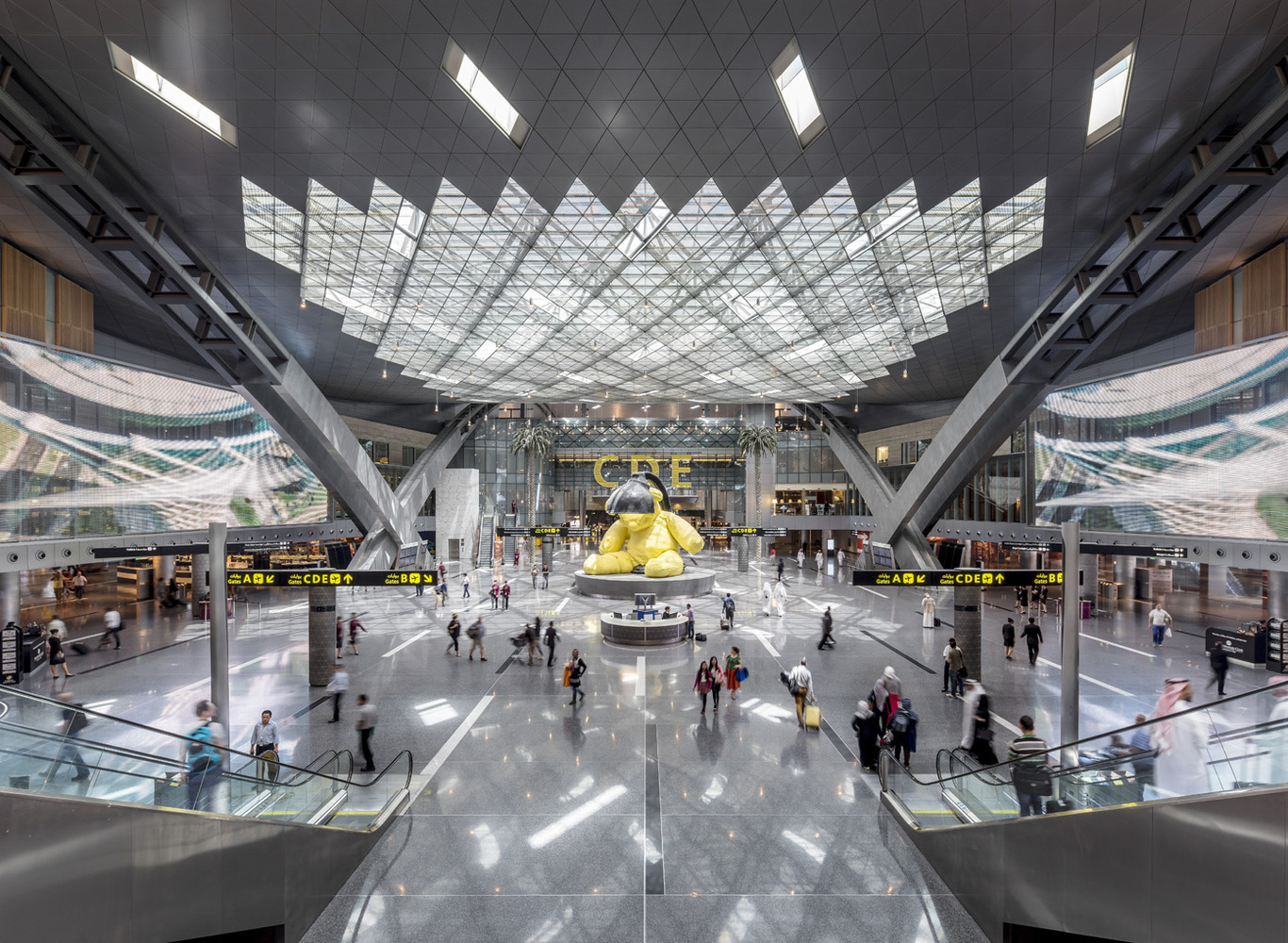
Hammad International Airport Passenger Terminal Complex
Qatar's iconic high-flow-rate terminal utilizes massive terrazzo surfaces, once again demonstrating its superior durability and strength in high-traffic, congested spaces such as airports, stadiums, and universities.
While other flooring systems require frequent replacement, terrazzo stands the test of time and is therefore cost-effective; it's no wonder this approach has been around for centuries.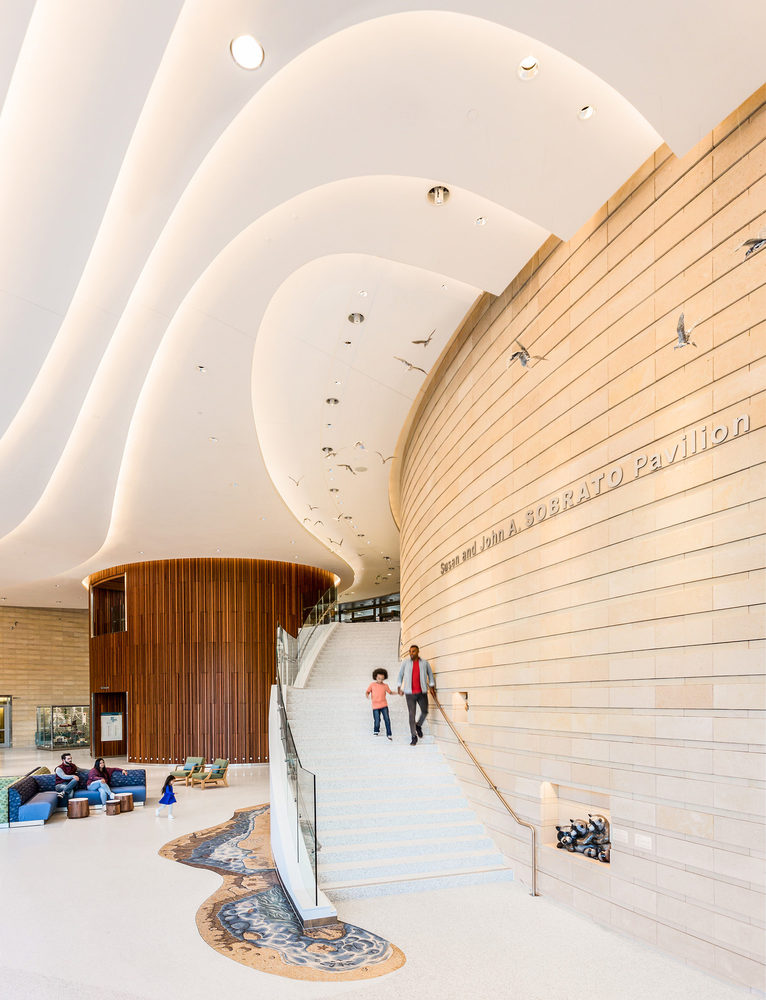
Lucille Packard Hospital, California, USA
Epoxy terrazzo at Lucille Packard Hospital in California, USA, serves as a canvas for waves and marine life, simulating and recreating the California coastline.
Crucial in any healthcare facility, in addition to facilitating wheelchair and bed access, the seamless flooring is easy to maintain, clean, and disinfect.
Furthermore, terrazzo prevents the growth of bacteria, mold, or mildew, ensuring a safe environment for patients.
These cases demonstrate how terrazzo can transform the function and experience of public facilities.
7. Choosing the Right Terrazzo Company
The performance of terrazzo flooring largely depends on the installer's skill and the quality of the materials.
Partnering with an experienced terrazzo company like Dongxing ensures consistent flooring, superior craftsmanship, and long-term value.
Dongxing offers integrated terrazzo solutions, from material formulation to on-site installation, to meet the unique needs of airports, hospitals, and other high-traffic locations.
With Italian-imported production machinery and a deep understanding of epoxy terrazzo flooring systems, Dongxing ensures that every project meets the highest performance standards.
8. The Enduring Appeal of Terrazzo Flooring
The history of terrazzo is one of continuous evolution.
From its origins in Venetian architecture to its role in modern public infrastructure, terrazzo has always represented durability, artistry, and innovation.
High-performance terrazzo flooring in airports and hospitals is more than just a flooring material; it's a long-term investment in aesthetics, functionality, and sustainability.
When carefully selected and installed by a professional terrazzo company, epoxy terrazzo and engineered terrazzo systems can redefine the user experience in any space—making them ideal for the most demanding environments on Earth.