



Calacatta Carrara vs Carrara Marble: Differences and Design Guide
2025-09-01 14:25Marble is one of the most admired natural stones in architecture and design. Among the many types available, Calacatta Carrara marble and Carrara marble are two of the most famous. Both come from the same Italian region, yet they have strikingly different looks, costs, and uses.
In this article, we will compare Carrara and Calacatta marble. We will explain their unique features and show how each can work in modern design. We will help you with care tips and pricing. We will also guide you on how to choose between a Carrara slab and a Calacatta marble slab for your next project.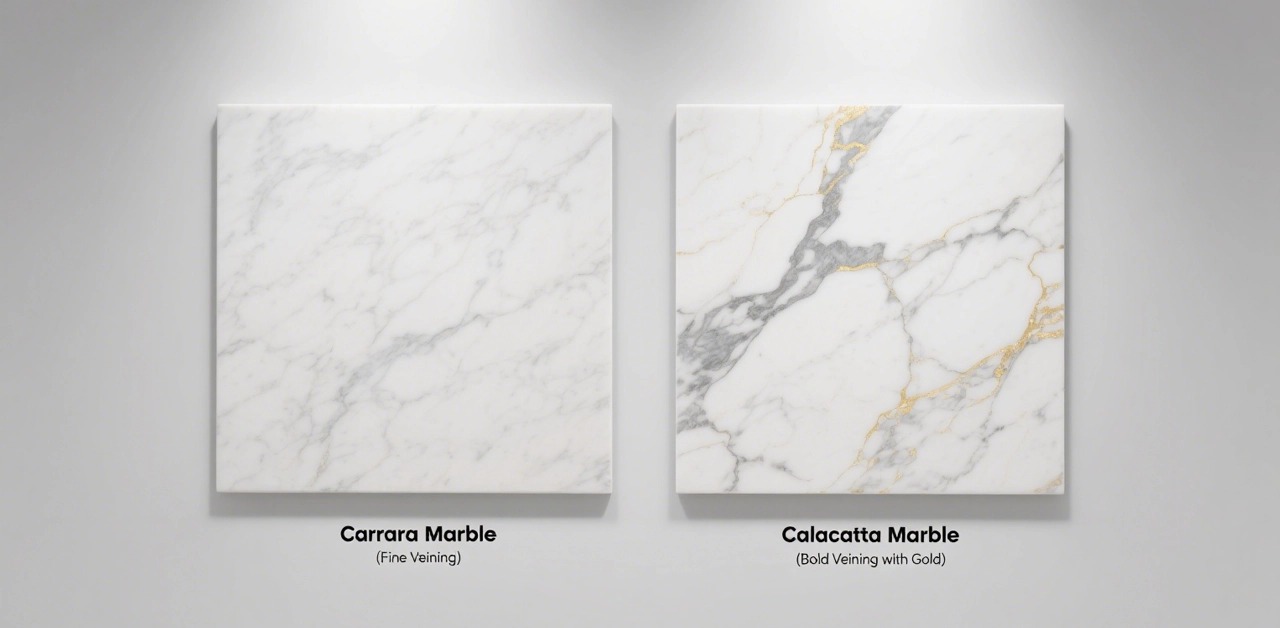
What Is Carrara Marble?
Quarries in Tuscany, Italy, have extracted Carrara marble for over 2,000 years. It has a soft white to bluish-gray base with fine, delicate veining. Its subtle beauty has made it a top choice for classic sculptures, timeless flooring, and contemporary countertops.
Main Features:
Base color: White to light gray.
Veining: Thin, soft, and feather-like.
Style: Calm, understated, versatile.
Uses: Flooring, bathroom vanities, kitchen tops, wall cladding, and statues.
Because it is more abundant, Carrara marble is also more affordable than other Italian marbles. It works well in both large residential projects and commercial buildings.
What Is Calacatta Carrara Marble?
Calacatta Carrara is rarer than standard Carrara. It comes from select quarries in the same region but has a much brighter white base and bold, dramatic veining. Designers often choose Calacatta Carrara marble when they want a statement piece.
Main Features:
Base color: Crisp, bright white.
Veining: Thick, bold, and high contrast.
Style: Luxurious, dramatic, eye-catching.
Uses: Kitchen islands, feature walls, hotel lobbies, luxury bathrooms, and high-end furniture.
Because of its rarity, Calacatta marble slabs often command premium pricing. Each slab is unique, which adds to its exclusivity.
Carrara vs Calacatta Marble: Key Differences
| Feature | Carrara Marble | Calacatta Carrara Marble |
| Color Base | Soft white or grayish | Brighter, pure white |
| Veining | Thin, subtle, feather-like | Thick, bold, dramatic |
| Cost | More affordable | Higher price due to rarity |
| Availability | More common | Rarer, less available |
| Design Effect | Elegant and subtle | Luxurious and striking |
Simple way to remember:
Choose Carrara for a soft, classic look.
Choose Calacatta Carrara for bold, luxury design.
Popular Applications of Carrara Marble
Carrara marble is timeless and works in many areas:
Kitchens: Countertops and backsplashes.
Bathrooms: Shower walls, vanities, and floors.
Living rooms: Fireplace surrounds.
Public spaces: Museums, hotels, and office floors.
Its subtle look makes it easy to combine with other materials like wood, glass, or metal.
Popular Applications of Calacatta Carrara Marble
Calacatta Carrara is often used to create a bold impression:
Kitchen islands: One large Calacatta marble slab becomes the centerpiece.
Bathrooms: Statement walls and luxury vanities.
Hotels and restaurants: High-traffic areas that need luxury appeal.
Custom furniture: Terrazzo-inspired tables, conference desks, or designer shelves.
Its dramatic veins work well in open spaces where the stone can stand out.
Cost Comparison: Carrara vs Calacatta
Carrara Marble: Affordable, making it ideal for bigger projects.
Calacatta Carrara Marble: Premium pricing due to exclusivity and bold design.
Carrara is good for everyday homes. Calacatta is better for high-end projects where there is a budget for rare stone.
Maintenance and Care Tips
Both stones need regular care because they are natural and porous:
Seal regularly: This prevents stains from wine, coffee, or oils.
Clean gently: Use a pH-neutral cleaner; avoid harsh chemicals.
Prevent scratches: Place mats under objects and avoid dragging heavy items.
Wipe spills quickly: Especially in kitchens and bathrooms.
With the right care, both Carrara marble and Calacatta Carrara marble can last for decades.
Calacatta Marble Slab vs Carrara Marble Slab in Design
When choosing a slab, consider your design vision:
Carrara Marble Slab: Works for a calm, minimalist home. Subtle patterns blend well with other design elements.
Calacatta Marble Slab: Ideal for creating bold focal points, especially in open-plan kitchens or hotel lobbies.
Many designers combine the two in one project—Carrara for flooring and Calacatta for statement features.
Sustainability and Modern Supply Chains
Today, homeowners and businesses are increasingly concerned about the ethical sourcing of products. Many marble suppliers now focus on responsible quarrying, reducing waste, and eco-friendly cutting techniques. Choosing a trusted supplier ensures your marble is authentic, durable, and responsibly sourced.
FAQ: Carrara vs Calacatta Marble
Q1: Is Calacatta Carrara the same as Carrara marble?
No. Both stones come from Tuscany. Calacatta Carrara has a brighter background and bolder veins. Carrara is softer and more subtle.
Q2: Which marble is more expensive?
Calacatta Carrara is more expensive because it is rarer and has striking patterns.
Q3: Can I use Carrara in kitchens?
Yes. Carrara marble countertops are popular, but sealing is important to prevent stains.
Q4: Are Calacatta marble slabs good for small spaces?
Yes. A single Calacatta marble slab can make a small bathroom or kitchen feel luxurious.
Q5: Which is better for flooring?
Carrara is often better for large floors because of cost, while Calacatta works for smaller, high-impact areas.
Conclusion
Both Carrara marble and Calacatta Carrara marble are icons of Italian craftsmanship.
Carrara marble is subtle, elegant, and affordable, perfect for timeless design.
Calacatta Carrara marble is bold, rare, and luxurious, perfect for dramatic spaces.
You can choose a Carrara slab for a classic home or a Calacatta marble slab for a luxury project. Both options add lasting value and beauty.
By working with a reliable marble supplier, you can make sure your chosen stone is real, well-made, and right for your space.